The Rebranding Conundrum
When does a brand need a refresh, and when is a new logo just an expensive distraction? A look at what separates meaningful rebrands from cosmetic ones.
By Stacey Pierre
The Logo-Rebrand That Shook Americans
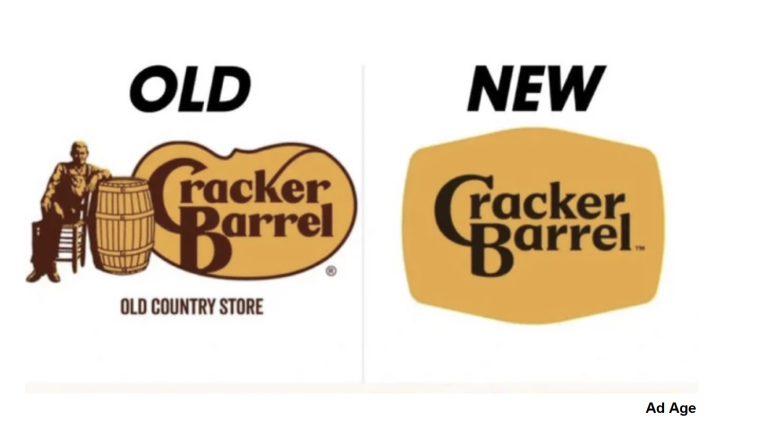
Reasonably priced food, that old southern charm and a dash of “allegedly” 1950s-like discrimination is what you think of when you think of Cracker Barrel. Young or old, Black or White, democrat or republican, Cracker Barrel is an American classic that seems to transport you back into a different time period. Their brand in the eyes of the American people seemed to be solidified. So, on Tuesday, August 19th when they unveiled their new logo during their “All the More” campaign, to say Americans were shocked is an understatement.
Accused of being too woke, alienating loyal customers, and just plain wrong on a design front, the restaurant’s stock fell 7.2%. But, let’s explore history for a bit. Did their logo always include a grainy figure of an unknown man?
A Brief History Lesson
Cracker Barrel opened its doors in 1969, and unbeknownst to many commenters their first logo was in-fact text only. It was not until 1977 when they transformed their logo to include the “Uncle Herschel” figure, leaning against a barrel.

Legacy brands often struggle with rebranding due to their strong establishment as a staple in people’s minds. Objectively, we can agree that the Cracker Barrel logo wasn’t a work of art. But, for many people it reminded them of a simpler time in the past, where you gathered around with your family at a large dining room table, ate a “home cooked” meal and had deep conversations about life and recent events.
So, it begs the question, if you are a legacy brand: How do you continue to innovate while still remaining true to your roots?
Back To The Marketing Basics
The simple, but not easy answer is: market research. The American Marketing Association defines marketing research as the function that links the consumer, customer, and public to the marketer through information. With this information, marketers identify and define marketing opportunities and problems. Market research has 5 key components:
1. Define the problem, the decision alternatives, and the research objectives
2. Develop a research plan
3. Collect the information
4. Analyze the information
5. Present the findings
6. Make the decisions
While defining the problem and conducting a research plan is no easy feat, I believe that analyzing the data to create an actionable marketing insight is the real challenge.
For example, there is no doubt in my mind that Cracker Barrel went through some deep conversations before changing their logo. No national brand makes decisions on a whim. Where I think they stumbled is in how they analyzed their findings. Yes, people are changing, and a lot more consumers prefer sleek modern design, but the real question is: What do YOUR consumers prefer?
Through conducting clear market research and utilizing techniques like creating buyer personas that actually reflect the complex and ever evolving nature of consumers, Cracker Barrel could have come up with a roll out that would have made people excited about the new logo. They could have made their audience feel like they had a voice and made it a collaborative process. They could have interpreted their results in a savvy rather than superficial way that just spoke to the logo. If the goal is to ultimately increase sales through customer acquisition and retention, so much more could have gone into this logo rebrand, that was more than a logo rebrand.
But, instead of harping on the should’ve, would’ve, could’ve’s, I leave you with this. The next time your legacy brand wants to update their logo, or creative assets, I implore you to go deeper. Don’t just look at the aesthetic appeal of your brand, instead view it holistically and ask yourself the hard questions. Get back to the marketing fundamentals. While fad marketing and following trends is more apparent than ever, there is something to be said when a team utilizes an evidence based, researched approach to their decision making that makes them stand out from the oversaturated crowd.